Key takeaways
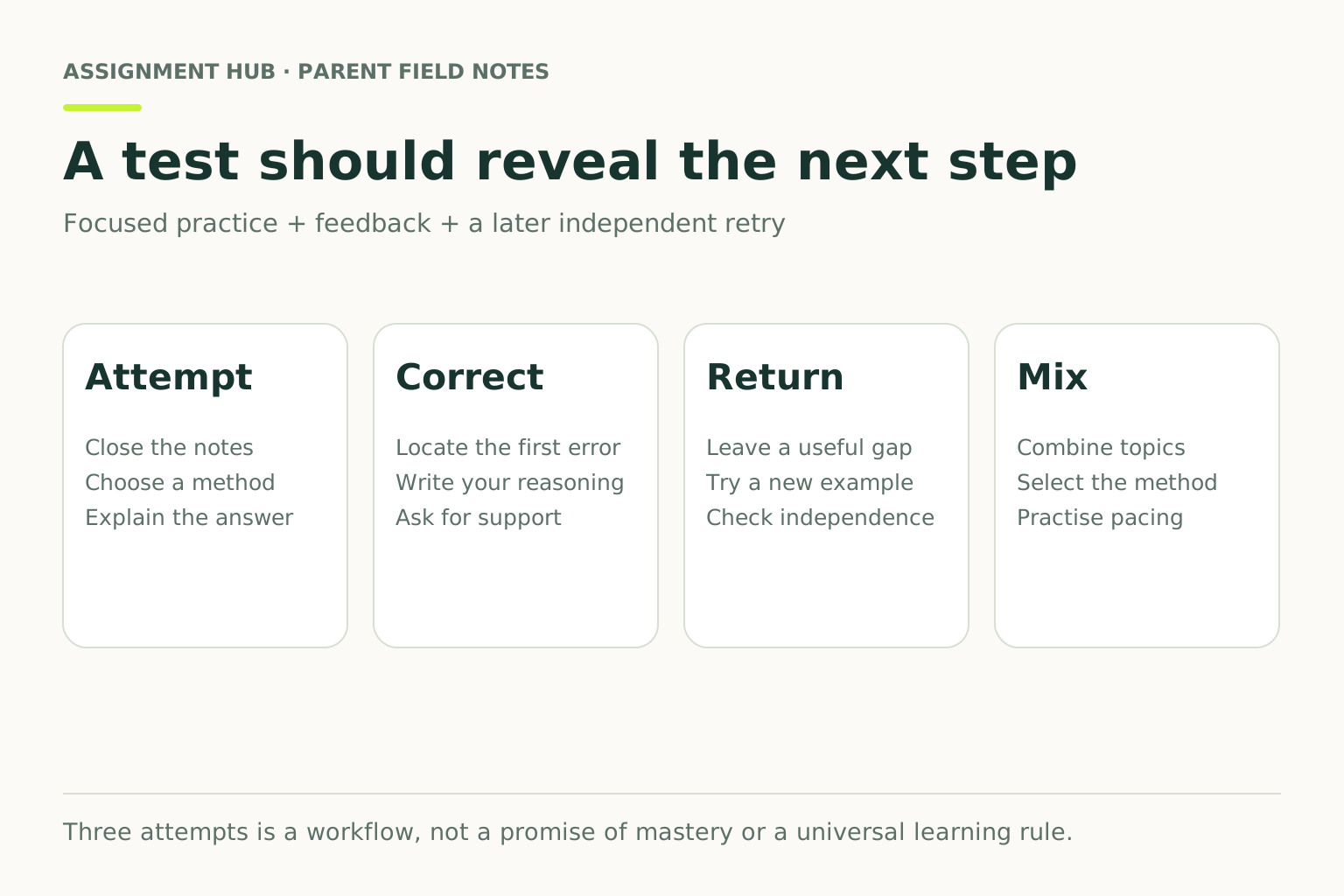
- Attempt before opening the answer or explanation.
- Correct the first mistaken step and return after a gap.
- Use focused batches with mixed and timed practice, not as a total replacement.
The short answer
Short topic-based tests help identify a specific gap and make correction manageable. Use them alongside mixed practice and full mocks, because recalling one topic and managing a complete paper are different skills.
What the Research Says
Roediger and Karpicke found benefits of retrieval practice for delayed retention under the conditions they studied. That supports testing yourself, but not a universal 50% improvement or a promise that three attempts will produce mastery for every learner.
Make the target small enough to diagnose
A whole-subject score can hide several different reasons for a mistake: missing knowledge, a misread instruction, an unfamiliar diagram or running out of time. A focused set on one topic makes it easier to notice which kind of error repeats and what teaching or practice should come next.
Write the target in plain language, such as “solve a linear equation and explain each inverse operation,” before choosing the questions. This gives the learner a reason for the practice and prevents a low mark from becoming a vague judgement about being bad at an entire subject.
Retrieve an answer before looking it up
Reading a worked solution can feel easy because the author has already chosen the method and supplied every step. Close the notes and try a related question so that the learner has to retrieve the idea, choose a procedure and explain why it fits the problem.
Check the answer afterwards, including the reasoning and units, then write one correction in the learner’s own words. The KJSEA revision guide provides original practice examples that show how to discuss an error without pretending that a supplementary set is an official national paper.
Understand what a 30-question batch offers
Assignment Hub organises published topic practice into batches, with new generated sets intended to contain 30 questions. Some legacy sets are shorter, so use the actual question count displayed rather than assuming every topic has the same amount of available content or an unlimited supply of fresh questions.
A batch can be worked through in manageable portions when the activity permits, but the quality of the correction matters more than finishing quickly. Choose published work for the learner’s grade and enrolled subjects; an unrelated advanced set is not automatically more valuable practice.
Treat three attempts as a workflow, not a law
The platform’s three-attempt mastery workflow gives structure to trying, reviewing and retrying a topic. It does not mean a learner should repeat the same choices immediately until the right letters are remembered, nor does it prove that every concept becomes secure on the third submission.
After the first attempt, identify one gap; after the next, ask for an independent explanation using a similar problem. If the difficulty persists, seek a different explanation or teacher support before another scored attempt, keeping the original mistakes as evidence of what needs attention.
Space retries and vary the problem
Return to a missed idea after a gap so that the learner must retrieve it again, rather than relying only on the answer they have just read. Change the numbers, context or representation while preserving the underlying idea, and ask which feature tells them what method to use.
For simple interest, move from finding interest to explaining the rate and time assumptions; for fractions, switch between a drawing and symbols. The Mathematics comparison guide demonstrates how explanation can reveal understanding that a final answer alone may not show.
Keep mixed practice and full papers in the plan
A topic heading gives a useful clue about which method applies, while a mixed paper requires the learner to select it without that clue. Once foundations improve, mix previously learned topics and practise reading instructions, allocating time and checking units under appropriate exam-style conditions.
Full mocks remain useful for stamina and time management, so focused tests should complement them rather than claim to replace every long assessment. Use the study timetable guide to balance targeted work, recall and occasional broader practice without filling every evening with testing.
Measure progress with a better question
Instead of asking only whether the score rose, ask whether the learner can explain a correction and solve a new example later without hints. A perfect immediate retry may reflect recognition of the previous answers, whereas a thoughtful delayed attempt can reveal more durable understanding.
Record the date, topic, first mistake and next independent result in a simple note, and share repeated difficulties with the teacher. Keep feedback calm and specific: the purpose of a short test is to make the next learning step clearer, not to create another daily ranking.
Sources and practical resources
Questions parents ask
Are short tests always better than long exams?
No. They help diagnose and practise specific topics, while mixed papers and full mocks develop selection of methods, stamina and time management.
Does three attempts mean a learner has mastered a topic?
No. It is a platform workflow; independent explanation and later application provide stronger evidence than an attempt count.
Will every topic always have 30 new questions?
No. Availability depends on published batches, and legacy sets can be shorter. Check the actual count and available next batch.
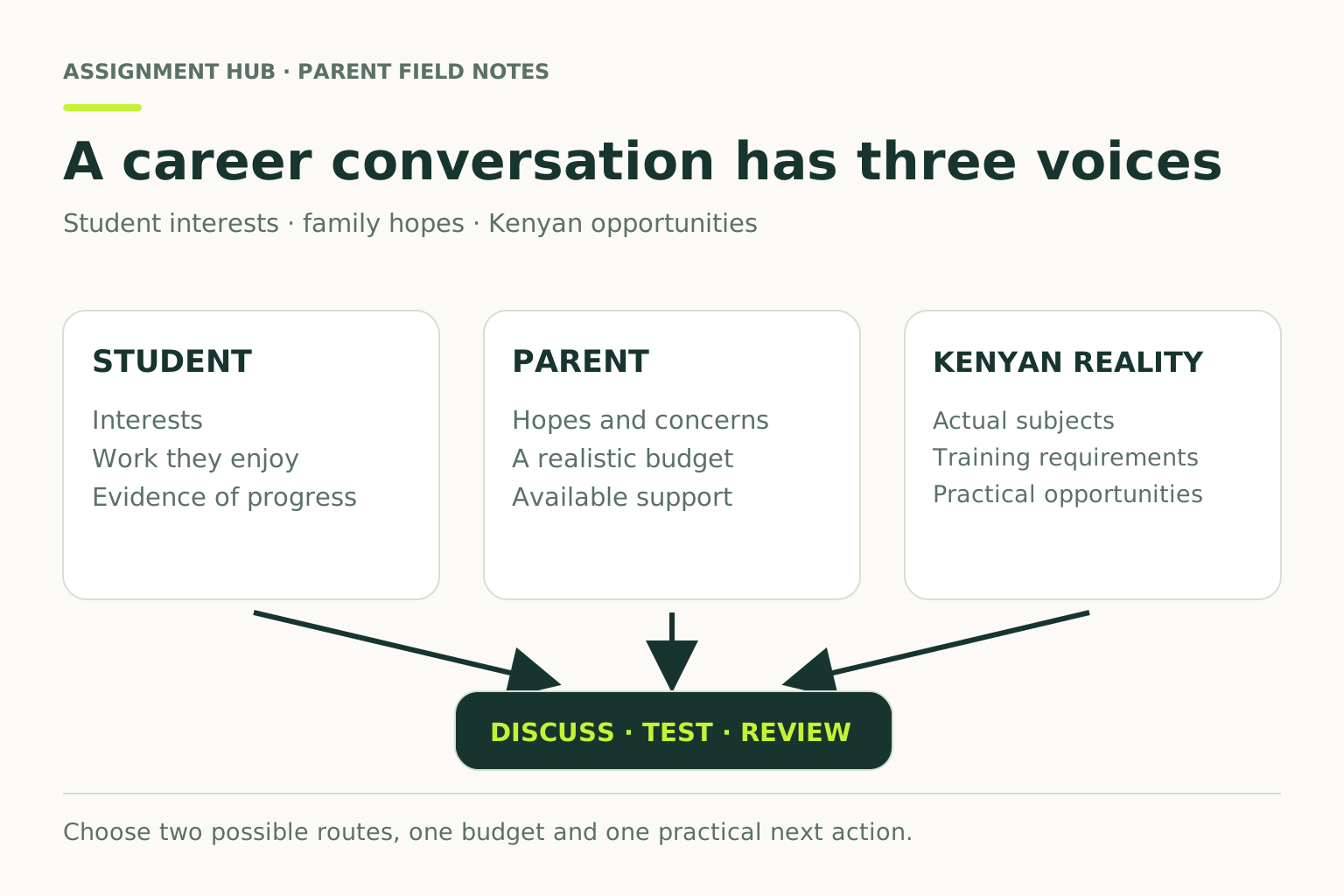
How This Connects to Your Child’s Career
Focused feedback helps learners strengthen the foundations needed for later subjects and courses. A practice score is information for support, not a permanent ceiling on career choices.
Read the Career Compass guideRelated guides
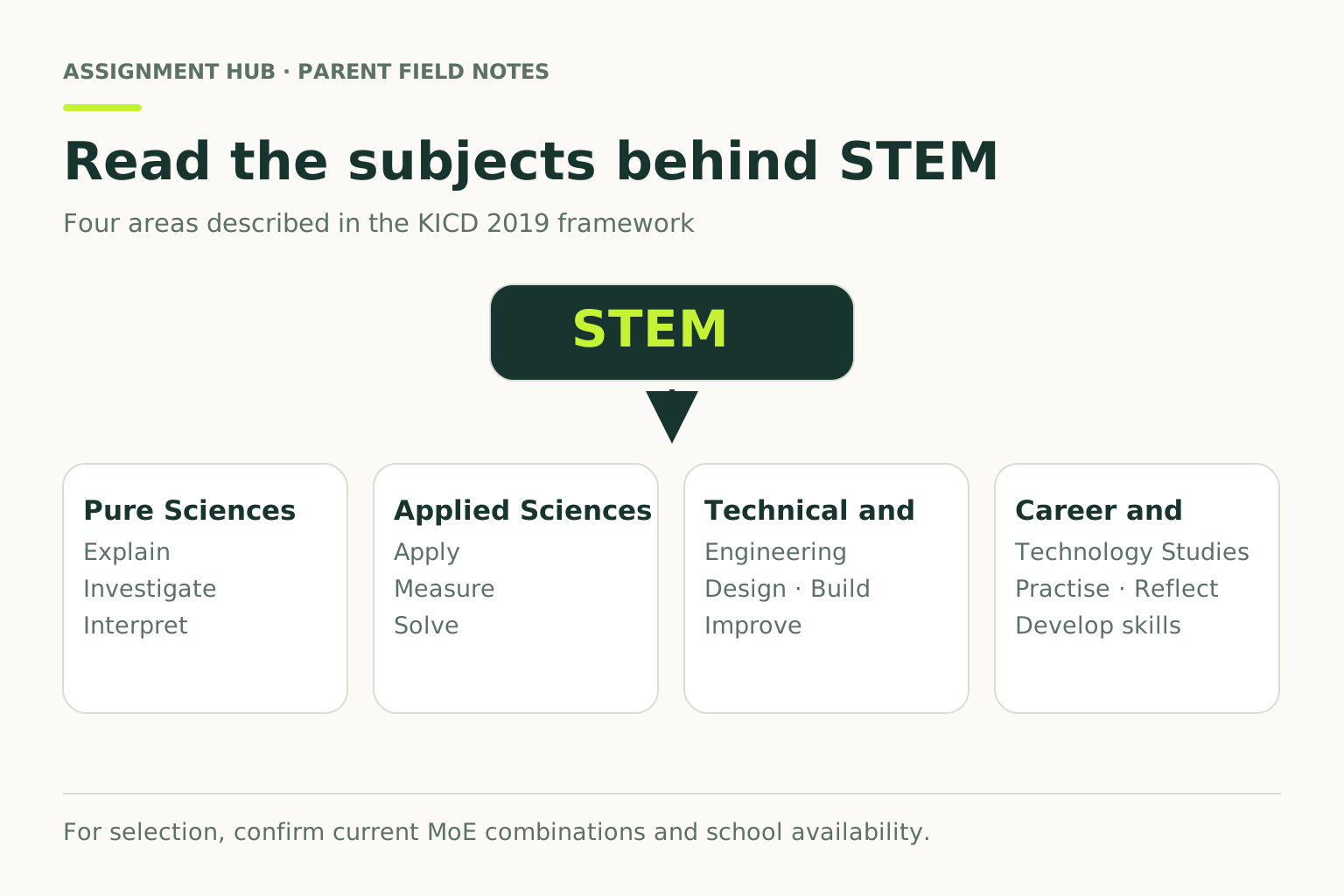
STEM Pathways for Grade 10 Kenya: Subjects and Choices
Read the guide →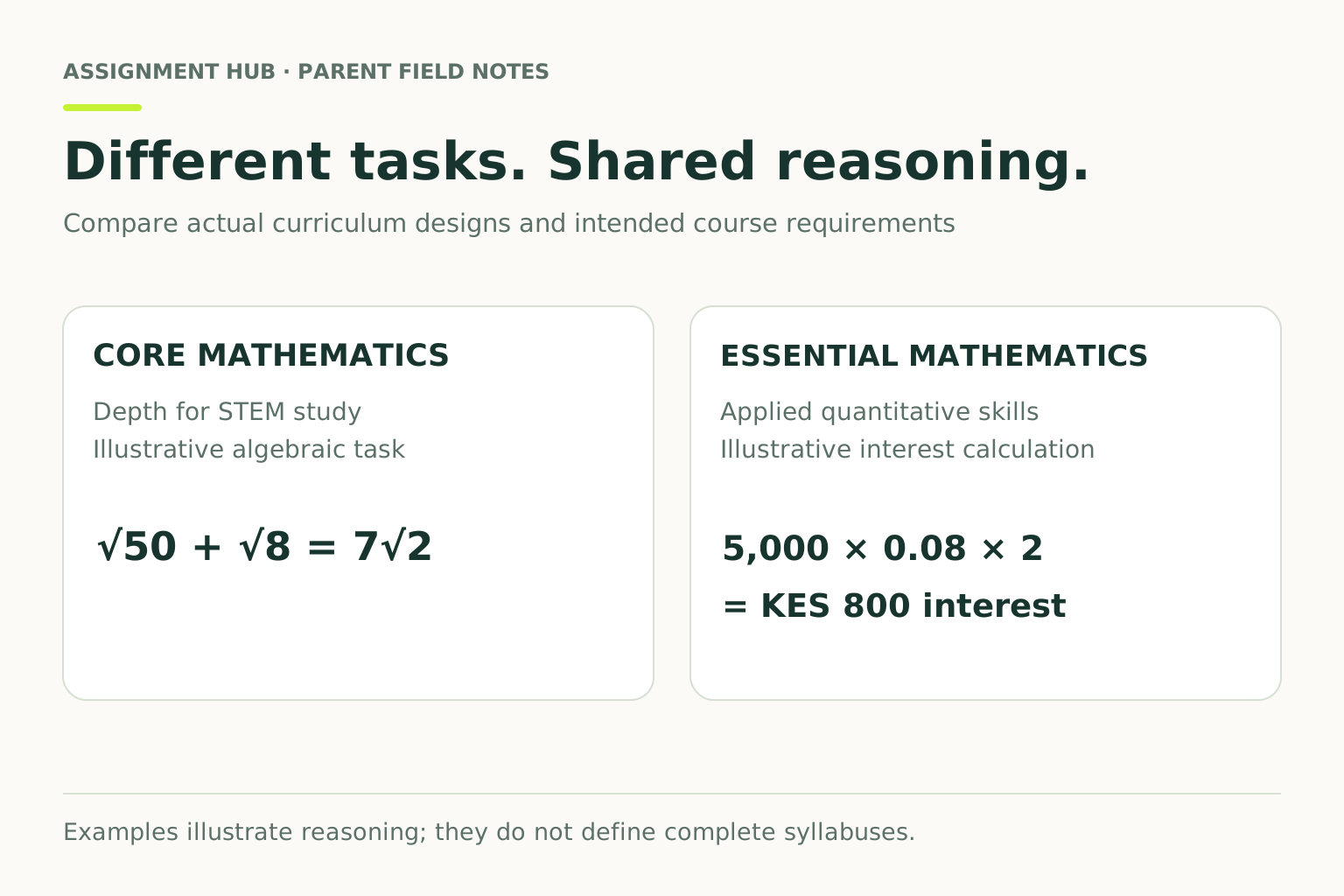
Core vs Essential Mathematics in Kenya: What's the Difference?
Read the guide →
CBC Grading System in Kenya: EE, ME, AE and BE Explained
Read the guide →