Key takeaways
- Plan from specific weak topics and realistic available time.
- Space practice and finish with a short independent recall task.
- Review the plan weekly instead of treating missed blocks as failure.
The short answer
An individualized timetable gives extra practice to the topics a learner needs while protecting rest and existing commitments. Combine spaced review, closed-book recall and feedback rather than filling every available hour with rereading.
What the Research Says
Cepeda and colleagues’ distributed-practice review found that spacing study can improve retention, with effects depending on timing and conditions. Ebbinghaus’s historical work does not establish a universal 80% improvement, and a 25-minute timer is a planning tool rather than a scientifically mandatory duration.
Find the problem before filling the calendar
Start with two recent pieces of work and identify the first incorrect step in each, rather than writing “revise Mathematics” across every evening. A learner who understands fractions but misreads a word problem needs a different task from one who cannot explain what the denominator represents.
Use report-card comments, assignment explanations and mock feedback together, because one rushed result can be misleading. The CBC grading guide shows how to turn a descriptor into a question about a specific skill before deciding how much extra practice is needed.
Protect school, home duties and sleep first
Write down lessons, travel, meals, responsibilities and a sensible bedtime before choosing study blocks. A timetable that assumes a private device, unlimited data or an empty evening will fail even when the learner is motivated; planning must fit the household that will actually use it.
Begin with a small number of dependable sessions and keep a paper alternative for shared-device days. Tell the teacher when time or materials are limited so that the family can prioritise the most useful work instead of quietly accumulating an impossible list of unfinished tasks.
Space review across more than one day
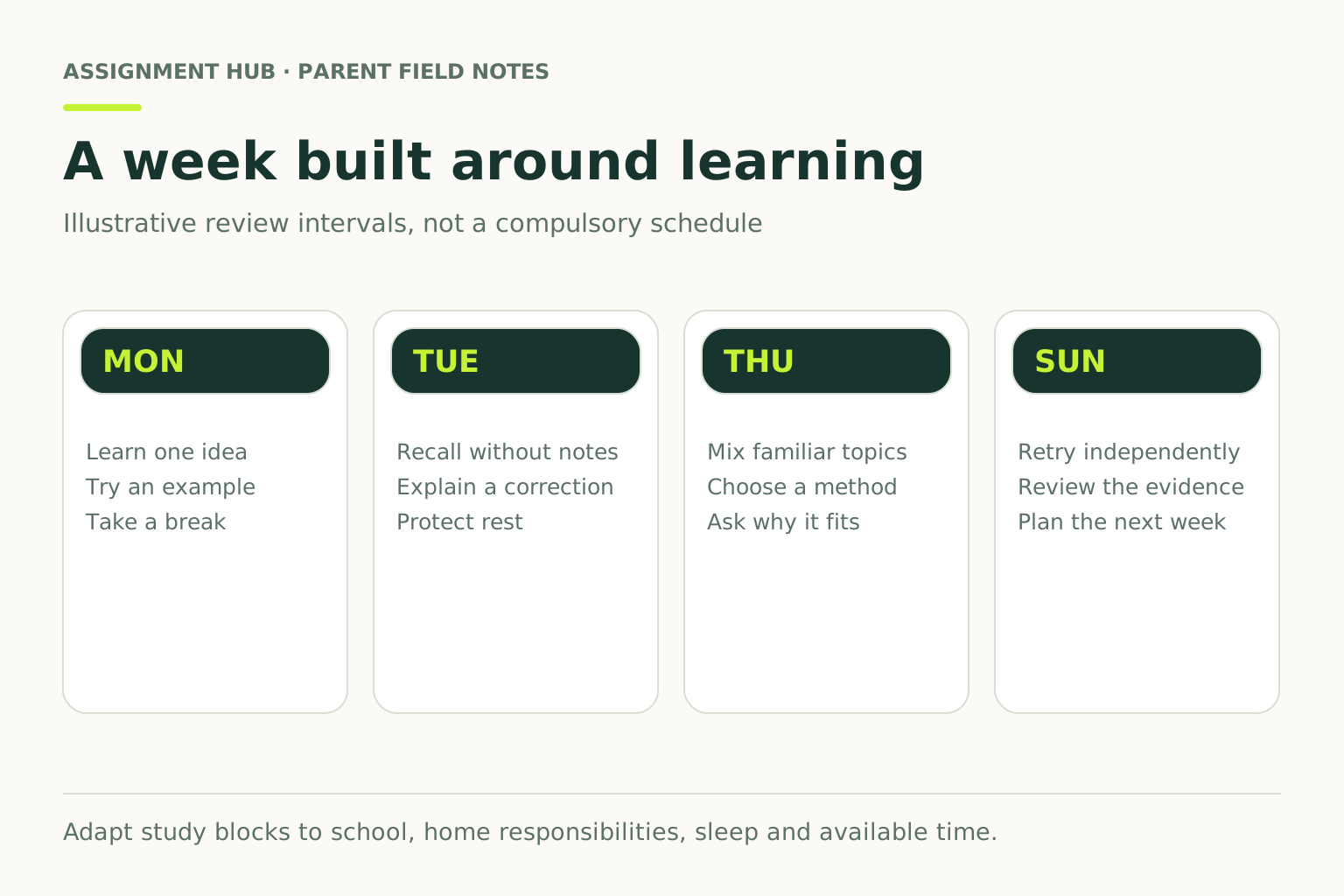
After learning a method, return to it the next day, again after a few days and later after a longer gap, adjusting the schedule to what the learner can retrieve. These are illustrative review intervals, not a guarantee that everyone will remember a topic after exactly the same number of sessions.
A Sunday-to-Monday review crosses the calendar boundary, so carry unfinished review into the following week rather than deleting it when a new timetable appears. Record whether the learner explained the method independently, since immediate familiarity with a worked example can look like lasting understanding.
Use a focus block with a clear finish
Try a manageable focus interval such as 25 minutes followed by a short break, reducing the duration when the task or learner needs it. Define an outcome before starting: solve two related examples, explain one misconception or draw and label a model from memory.
After several demanding blocks, allow a longer rest or a chosen reward that does not consume the rest of the evening. Pomodoro can help make time visible, but the goal is a sustainable rhythm with completed learning tasks, not collecting impressive timer totals while exhausted.
Mix subjects and end with active recall
Interleaving means bringing previously learned material into practice so that the learner must decide which method applies. It does not mean switching subjects every minute or presenting several unfamiliar procedures before any has been explained; start with enough guidance to attempt the work meaningfully.
Finish a session with three to five quick questions without notes, then check and correct them before stopping. Our short topic-test guide explains how an honest correction and a later independent retry provide better evidence than a high score achieved while copying the example.
Use the Learning Coach as a starting plan
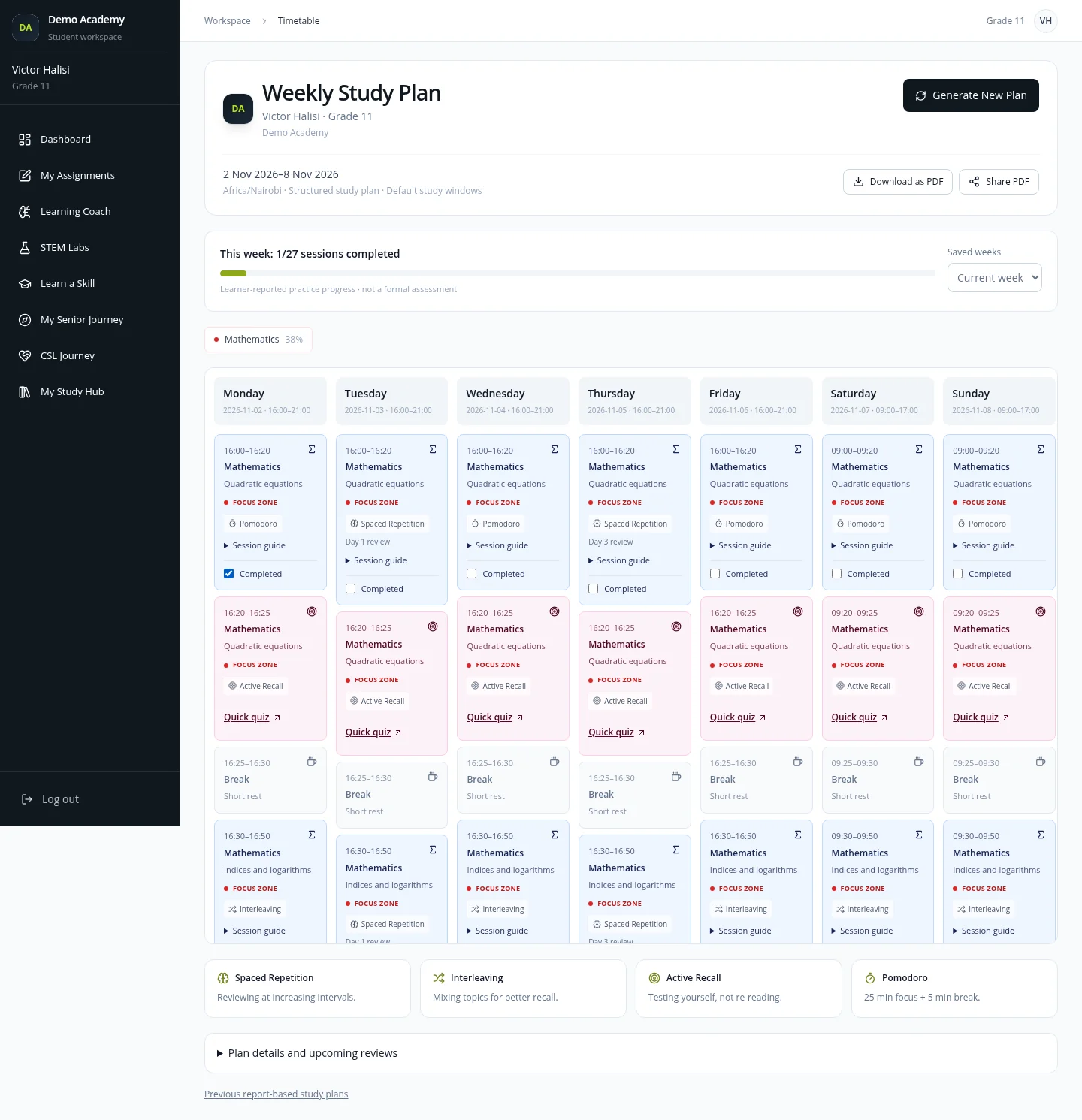
Assignment Hub’s study planning draws on available learning evidence to suggest a weekly routine, including topic work, recall and breaks. Check the generated plan against the student’s actual school timetable and household commitments rather than assuming an AI suggestion knows every appointment or family responsibility.
The printable view helps keep the plan visible away from a screen, while published practice links depend on the learner’s available content and curriculum scope. AI output can need adjustment; a sensible plan leaves room to ask a teacher about a persistent misconception instead of simply generating another timetable.
Review a week without blame
At the weekend, ask which sessions were completed, which produced independent understanding and which were unrealistic. Move a block that repeatedly conflicts with chores, shorten a task that is too broad and keep a small record of the topic that still needs help.
Count learning evidence as well as attendance: explaining a correction a week later matters more than colouring every calendar square. If progress stalls, show the teacher the attempted work and use the Mathematics guide to frame a specific question about foundations rather than ability.
Sources and practical resources
Questions parents ask
Must every session last 25 minutes?
No. Use a duration the learner can sustain and adjust it to the task, age and available time. A timer supports planning; it is not the learning outcome.
How often should a timetable change?
Review it weekly and after new assessment feedback or a change in commitments. Keep useful review sessions instead of starting from zero each time.
Does AI guarantee better marks?
No. A plan supports practice, but progress depends on the tasks, feedback, support and whether the learner follows and adapts the routine.
How This Connects to Your Child’s Career
Planning, checking evidence and adjusting after feedback are useful across study and work. Use the timetable to strengthen required subjects while keeping wider pathway conversations open.
Read the Career Compass guideRelated guides
STEM Pathways for Grade 10 Kenya: Subjects and Choices
Read the guide →
Core vs Essential Mathematics in Kenya: What's the Difference?
Read the guide →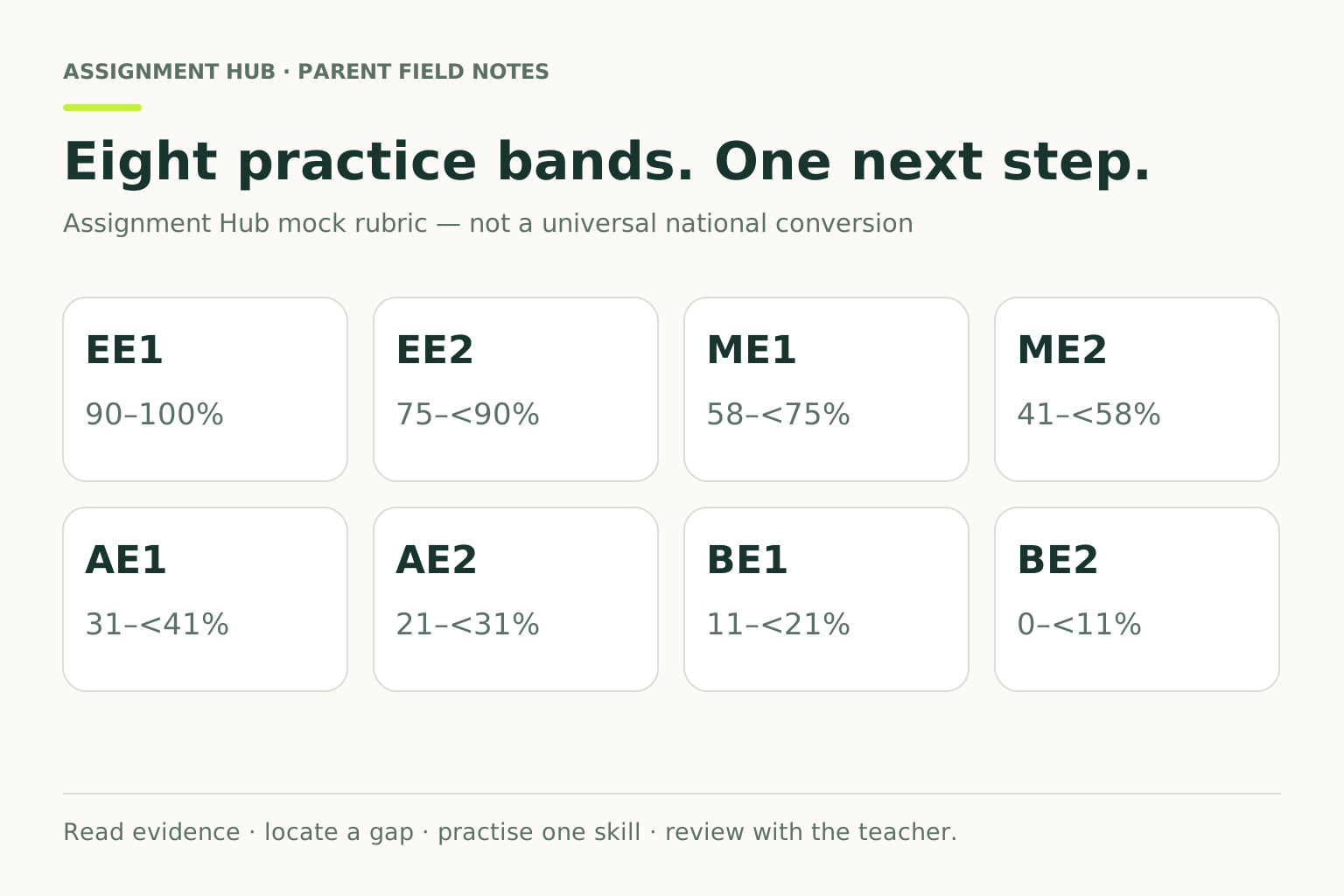
CBC Grading System in Kenya: EE, ME, AE and BE Explained
Read the guide →